Blog

  • Madikeri Municipal Corporation Bars Arecanut Plates, Paper Cups and Water Bottles

    Madikeri Municipal Corporation Bars Arecanut Plates, Paper Cups and Water Bottles

    Madikeri Municipal Corporation has barred the use and sale of arecanut plates, paper cups, paper plates and 1/4, 1/2 and 1‑litre water bottles within its limits. The Municipal Corporation Management Board and the municipal commissioner issued the order, and on Saturday municipal staff handed out copies to traders to inform them of the restrictions.

    Local traders and the public have protested the ban, arguing that areca leaves and paper cups decompose in soil and are traditionally used at temple festivals, public and government programmes and sports events, where they are disposed of responsibly.

    Naveen Ambekal, vice‑president of the Kodagu District Chamber of Commerce, said the corporation’s decisions apply only to Madikeri and that visitors may bring the prohibited items from elsewhere for private functions, which the CMC cannot control. He added that the CMC acted without consulting the district administration and that a district‑wide ban would avoid such issues.

    Ambekal also noted that earlier CMC orders to prohibit plastic bottles were poorly enforced, as tourists often bring bottles from outside and plastic use is permitted in villages within a 2 km radius of Madikeri, making a ban limited to the city ineffective.

  • Mysuru footpath clearance drive offers only temporary relief as vendors return

    Mysuru footpath clearance drive offers only temporary relief as vendors return

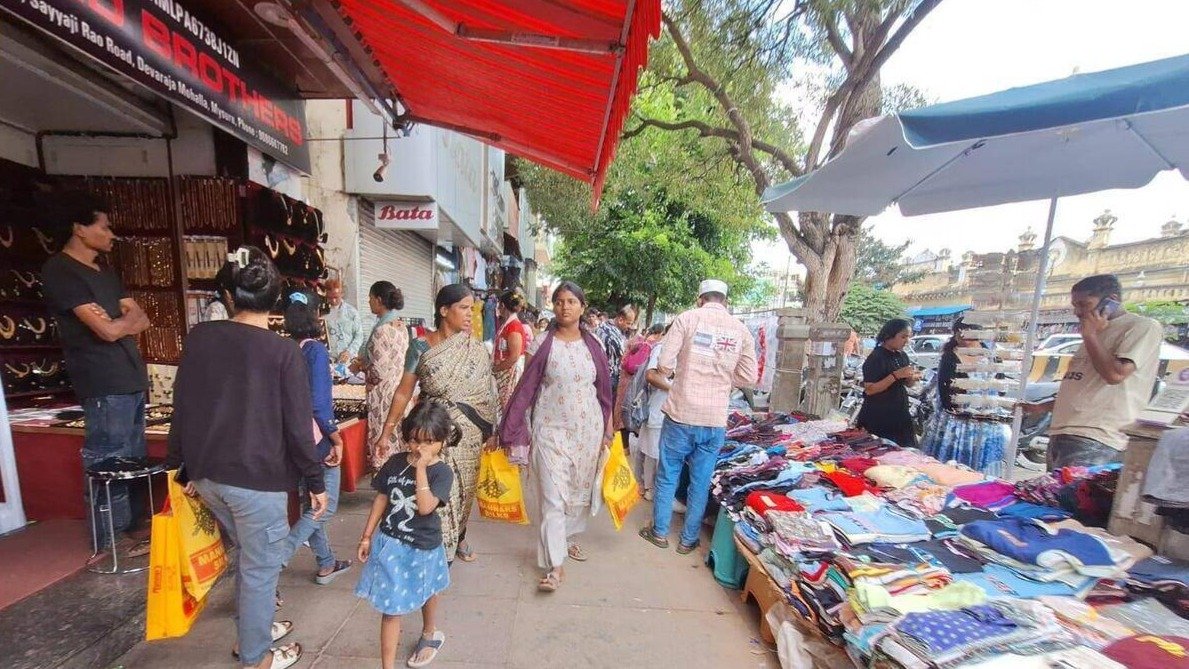
    Mysuru City Corporation’s recent anti‑footpath encroachment drive, hailed as a step to free pedestrian space, has yielded only a brief respite; within days vendors have returned to sidewalks in several parts of Mysuru, with residents noting that enforcement was largely limited to central zones while footpaths elsewhere remain blocked, raising doubts about the drive’s lasting impact.

    Vendors have re‑occupied footpaths at multiple sites, including the Central Business District (CBD), after a short pause following the eviction operation, and encroachments persist around Devaraja Market where traffic congestion is already a serious problem, with stalls spilling onto both sidewalks and the roadway.

    “It is tough even to enter Devaraja Market,” said Sarojini M, a resident of Agrahara, adding that the entire area is now encroached.

    Civic activist Raghu Gowda argued that clearing the road and footpath encroachments around Devaraja Market, Chamaraja Double Road and the road linking the Suburban Bus Stand would markedly improve traffic flow and pedestrian movement in the CBD, but noted that vendors are operating without fear of the law.

    Bhaskar Shrinivasa Raje Urs, vice‑president (South) of the National Association of Street Vendors of India (NASVI), said vendors who hold identity cards and are registered with the MCC are complying with guidelines, and blamed the bulk of the problem on out‑of‑state vendors who illegally occupy sidewalks. He urged authorities to provide dedicated arrangements for street vendors during Dasara, similar to provisions made for events such as the Open Street Festival.

    “If you visit the urban pockets around the city, there is no end to this menace. Footpaths have been encroached upon extensively, but there is hardly any action,” remarked Ravi Kirthi Gowda, a resident of Dattagalli.

  • Urban Local Bodies Ordered to Boost Revenue Collection

    Urban Local Bodies Ordered to Boost Revenue Collection

    In Mysuru, Karnataka’s Municipal Administration Minister HC Balakrishna, on Tuesday instructed officials from urban local bodies to focus on resource mobilisation and revenue collection, emphasizing that these steps are essential for the effective implementation of government programmes and development projects within their jurisdictions.

    Chairing a meeting with urban local body officials from Hassan and Mandya districts at the Regional Commissioner’s office in Mysuru, Balakrishna noted that Union and state governments release 30% of project costs under various schemes for all urban local bodies and urged officials to mobilise the remaining resources, particularly through property tax and water tax, to ensure development works proceed smoothly.

    He announced that the department will shortly issue an order allowing urban local bodies to develop private roads after bringing them under their control, and warned that serious action would be taken against any official negligent in recovering monthly rent from tenants.

    Responding to complaints about the slow progress of drinking water supply and underground drainage projects, the minister said a special meeting involving officials, contractors, local elected representatives and MLAs will be convened soon to identify and remove obstacles to faster execution.

    Balakrishna also said he will write to all Deputy Commissioners requesting the reservation of at least five acres on the outskirts of every town for allocating sites and constructing houses for pourakarmikas in each district.

    Excise Minister and Hassan district minister KM Shivalingegowda highlighted the staff shortage in urban local bodies, affecting development work; Balakrishna directed officials to appoint staff on an outsourcing basis and to recall personnel working in other departments back to their parent departments.

    The meeting was attended by MLAs A Manju and AB Rameshbabu Bandisiddegowda, along with Municipal Administration Director P Ravindra.

  • Mysuru Dasara Elephants on Special Nutritional Regime for Jumboo Savari

    Mysuru Dasara Elephants on Special Nutritional Regime for Jumboo Savari

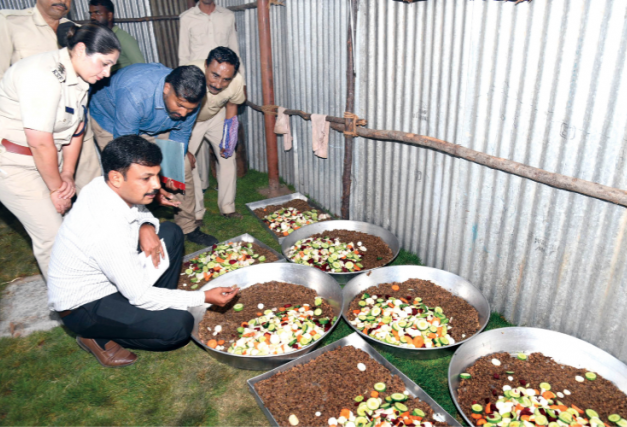
    Nine Dasara elephants have arrived in Mysuru from various camps and are housed at the Mysore Palace to take part in the Jumboo Savari. Conservator of Forests Dr. S.S. Ravishankar says the males receive 13‑14 kg and females 11‑12 kg of special feed twice daily, with a total of 66‑700 kg of fodder for males and 500‑600 kg for females each day.

    The special diet includes green gram, horse gram, urad grains, rice, salt, onions, radish, carrot, beetroot, cucumber and other vegetables, supplemented with leaves and green grass. These ingredients are cooked carefully for six to seven hours and served in the mornings and evenings after the elephants finish their training.

    For the first time, the herd is also being given avalakki (flattened rice) and curds once a day to keep them cool and help prevent musth, officials said. The menu prioritises fibre‑rich items while protein‑ and carbohydrate‑rich foods are also prepared and fed.

    Officials noted that excessive weight gain is unhealthy; last year, the elephant Bheema added about 500 kg and other elephants about 200 kg by eating leftovers. This year, feed is being allocated strictly according to the diet chart.

    A second batch of three Dasara elephants is expected soon. Abhimanyu, slated to serve as the ‘Nishane’ elephant, will reach the city 15 days before the grand finale, and weight‑carrying training begins this evening, with Mahendra already handling sand bags as part of the regimen.

    The Conservator of Forests has urged spectators to keep a safe distance from the elephants during the Jumboo Savari route and to refrain from agitating or feeding them.

  • Uncertainty Clouds Mysuru Dasara 2026 Air Show

    Uncertainty Clouds Mysuru Dasara 2026 Air Show

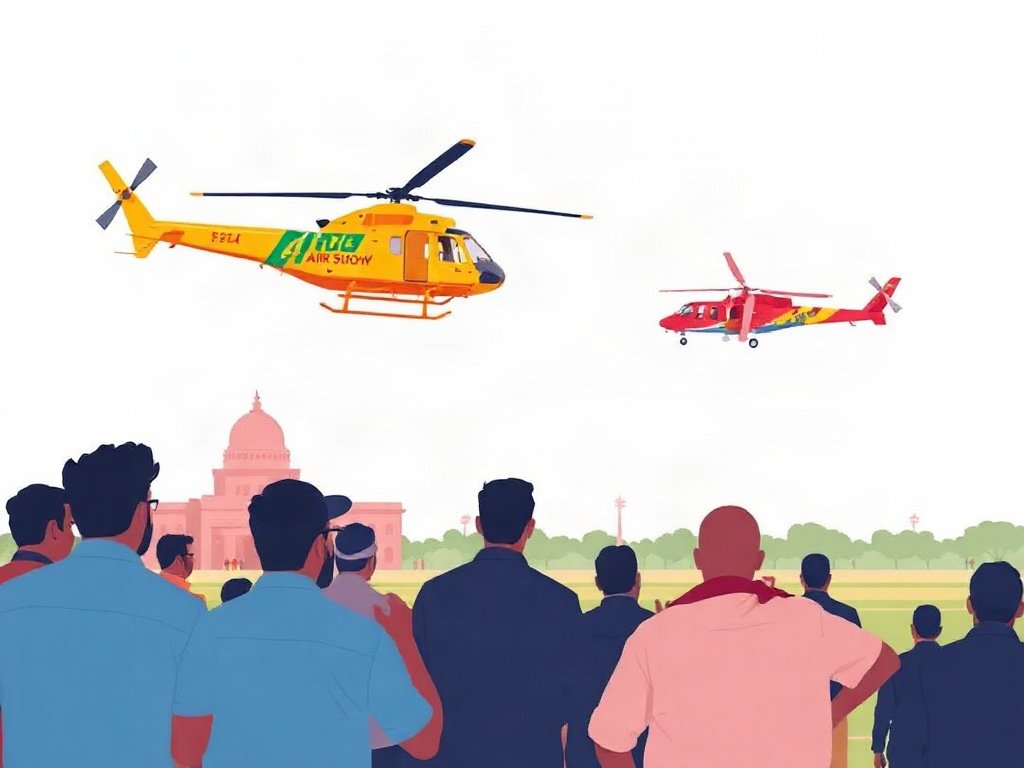
    The 2026 Dasara Air Show in Mysuru remains in doubt as the Indian Air Force’s Sarang Helicopter Display Team is expected to skip the event because of a congested schedule, and officials are still awaiting confirmation from the Surya Kiran Aerobatic Team. Meanwhile, the state government has written to the Defence Ministry requesting that an air display be organised as part of this year’s Mysuru Dasara celebrations.

  • Mysuru City Corporation Sets Final Deadline for Removing Parked Vehicles

    Mysuru City Corporation Sets Final Deadline for Removing Parked Vehicles

    Mysuru City Corporation has set a final deadline of September 12 for the removal of unauthorized vehicles parked on public roads and pedestrian paths across the city.

    The corporation identified these vehicles and posted notices on them between August 25 and August 31, directing owners to clear them within seven days. After owners requested more time, Corporation Commissioner M.K. Savitha said no further extension will be granted.

    260907-39-416714355

  • Forest Officials Detain Farmer Over Bear Electrocution in Shivamogga

    Forest Officials Detain Farmer Over Bear Electrocution in Shivamogga

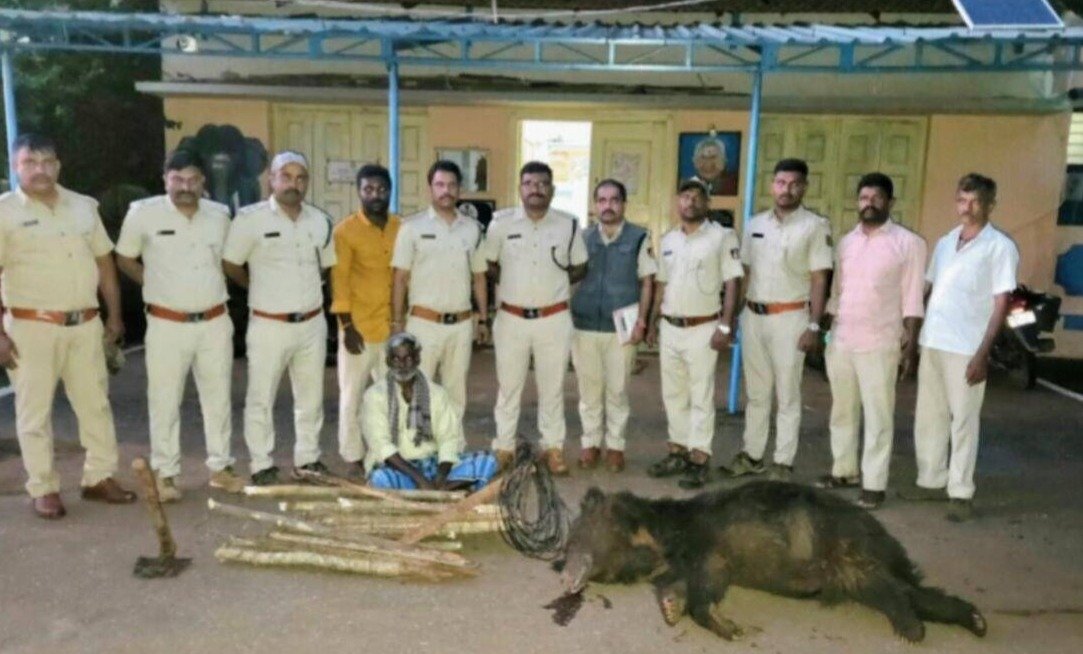
    Forest officials have apprehended a farmer in connection with the death of a young bear in Yadehalli village, Holehonnuru hobli. The operation was led by Bhadravathi division Deputy Conservator of Forests Ravindra Kumar and Channagiri subdivision Assistant Conservator of Forests Shridhar Tegginamani, with Shantisagara Range Forest Officer Lakshman Naik T Chauhan and his team executing the plan on the ground.

    The probe found that Govindappa, son of the late Kannappa and resident of Doddaseege, had allegedly installed an illegal high‑voltage electric fence around his arecanut plantation, which electrocuted an approximately three‑year‑old male bear. The accused is said to have buried the carcass in a trench on his farm to conceal the incident.

    Forest officers located the site on Saturday, recovered the bear’s body and charged Govindappa under Sections 9 and 39 (read with Sections 2(16), 36, 50 and 51) of the Wildlife Protection Act, 1972. He was presented before a local court in Bhadravathi and remanded to judicial custody, while wildlife veterinarian Muruli Manohar performed the autopsy.

  • Dwindling Reservoir Levels Threaten Mysuru’s Crops

    Dwindling Reservoir Levels Threaten Mysuru’s Crops

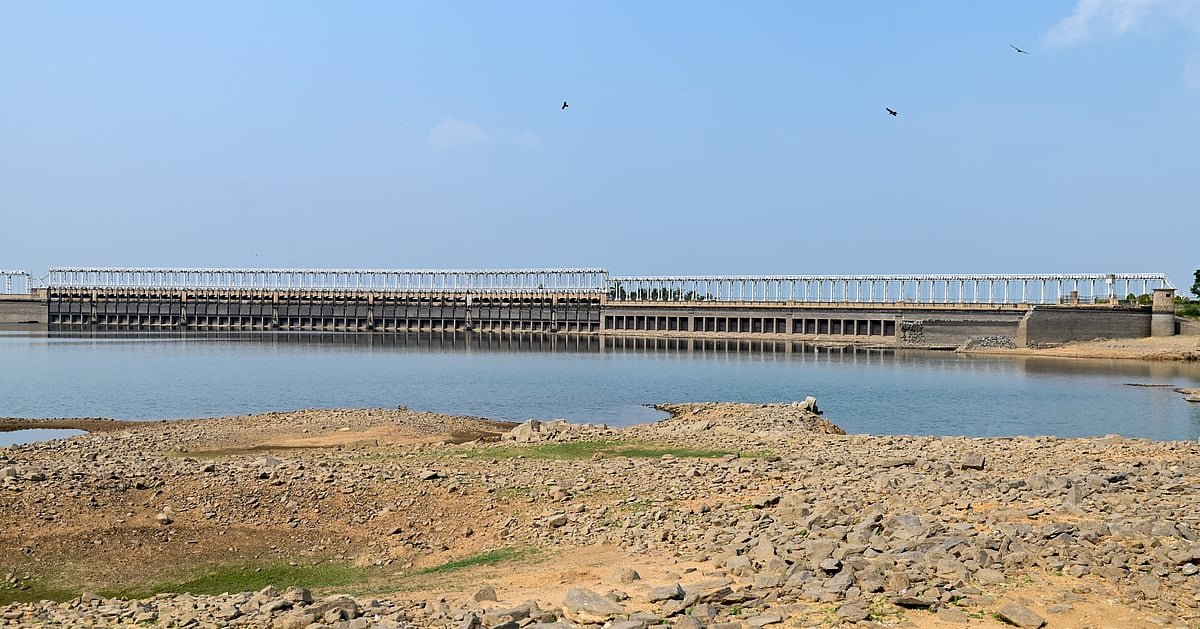
    Mysuru’s farmers, especially those growing paddy, are confronting a severe water crunch as the Kabini and KRS reservoirs have dropped following water releases to Tamil Nadu, leaving only enough for drinking needs and threatening the region’s ability to meet its sowing target, projected at under 50% this year.

    The water level in the KRS dam stood at 107 feet on September 6, with an inflow of 2,774 cusec and an outflow of 8,983 cusec.

    K H Ravi, Joint Director of the Agriculture Department, said Mysuru district could achieve only 44% of its sowing target this year because of deficit rains. He noted that the total cultivable area is about 3.82 lakh hectares, including roughly one lakh hectares irrigated by the KRS and Kabini dams and 2.7 lakh hectares that are rain‑fed, and that the increased inflow will suffice only for drinking water.

    District in‑charge Minister Yathindra Siddaramaiah clarified that water is being released solely to fill lakes and ponds and will not be allocated for paddy cultivation. Of the 3,76,609 hectares earmarked for sowing in Mysuru, only 44.11% (1,66,441 hectares) have been planted.

    The region received scanty rainfall during the pre‑monsoon season, which hampered pre‑kharif sowing and other agricultural activities.

    Kurubur Shanthakumar, president of the Sugarcane Growers Association, warned that paddy farmers could suffer crop damage because the Irrigation Consultative Committee has limited water releases to four rotations, stating, “Paddy is a 120‑day cycle crop. The farmers will suffer loss if the government stops releasing water to canals.”

    Following farmer protests—during which several demonstrators were briefly detained while attempting to lay siege to the KRS dam—water is now being released on a rotation basis from KRS to fill lakes, support short‑term, less‑water‑intensive crops and protect sugarcane and other crops.

    In Mandya district, more than half of the land is agricultural, with a sowing area of 2.49 lakh hectares and about 1.17 lakh hectares irrigated by the KRS and Hemavathi reservoirs. G S Jayaswamy, Joint Director for Agriculture, said deficit rains have forced officials to prohibit paddy cultivation, yet some farmers continue with paddy and sugarcane, making water releases difficult and risking losses on seeds, fertilisers and other inputs.

    Hassan district had a sowing target of 2,86,186 hectares but only 93,004 hectares have been planted; officials have advised farmers to switch to ragi, a less water‑intensive crop, due to the same deficit‑rain situation.

  • Palakkad Railway Division to Lose ₹650 Crore Annually as Mangaluru Region Moves to Mysuru Division

    Palakkad Railway Division to Lose ₹650 Crore Annually as Mangaluru Region Moves to Mysuru Division

    The Palakkad Railway Division is set to face a significant financial blow with an expected annual loss of ₹650 crore in freight revenue. This loss accounts for 90.2% of the division’s total freight earnings and arises from the transfer of operational control over the Mangaluru region to the Mysuru Division, effective October 1.

    The division presently records a freight turnover of ₹722.2 crore per year, and about 22 to 25 goods trains run daily from Mangaluru to Kerala.

    In December 2023 alone, the Palakkad Division earned ₹50 crore from Mangaluru Port, moving 204 loaded rakes, 10,670 wagons and 0.697 million tonnes of cargo, chiefly coal, petcoke, fertilisers, petroleum products and edible oil.

    Following the shift, South Western Railway will fully manage freight trains from Panambur Port to Kerala, leaving Palakkad without any port linkage, its main loading point and pit line facilities for goods‑train maintenance, and the services of 50‑60 specialised staff in Mangaluru.

    Mangaluru’s three pit lines can simultaneously service nine trains. A suggested remedy is to create a dedicated Kerala railway zone by merging the Palakkad and Thiruvananthapuram divisions, with a potential zonal office on about five acres of unused railway land near the High Court in Ernakulam, close to Cochin Port and the Vallarpadam Container Terminal.

  • Electric Bus Ignites Near Hunsur, All 16 Passengers Safely Evacuated

    Electric Bus Ignites Near Hunsur, All 16 Passengers Safely Evacuated

    An electric bus traveling from Virajpet, Kodagu to Bengaluru caught fire near Madhugiri Koppalu Cross on the Hunsur‑Mysuru highway late Saturday. The driver and conductor halted the vehicle, evacuated all 16 passengers and their luggage, and the bus was subsequently gutted by flames. All occupants were rescued safely.

    Additional Superintendent of Police Mallik C verified the event, confirming that every passenger was safely removed after the fire was spotted. Officials reported that a suspension balloon had ruptured during the trip, igniting the blaze without warning. Firefighters were summoned promptly; although thick smoke and flames had already enveloped the bus, they succeeded in controlling and fully extinguishing the fire. The stranded travelers were later transferred to Bengaluru on an alternate bus, and the incident disrupted traffic on the highway for about two hours.