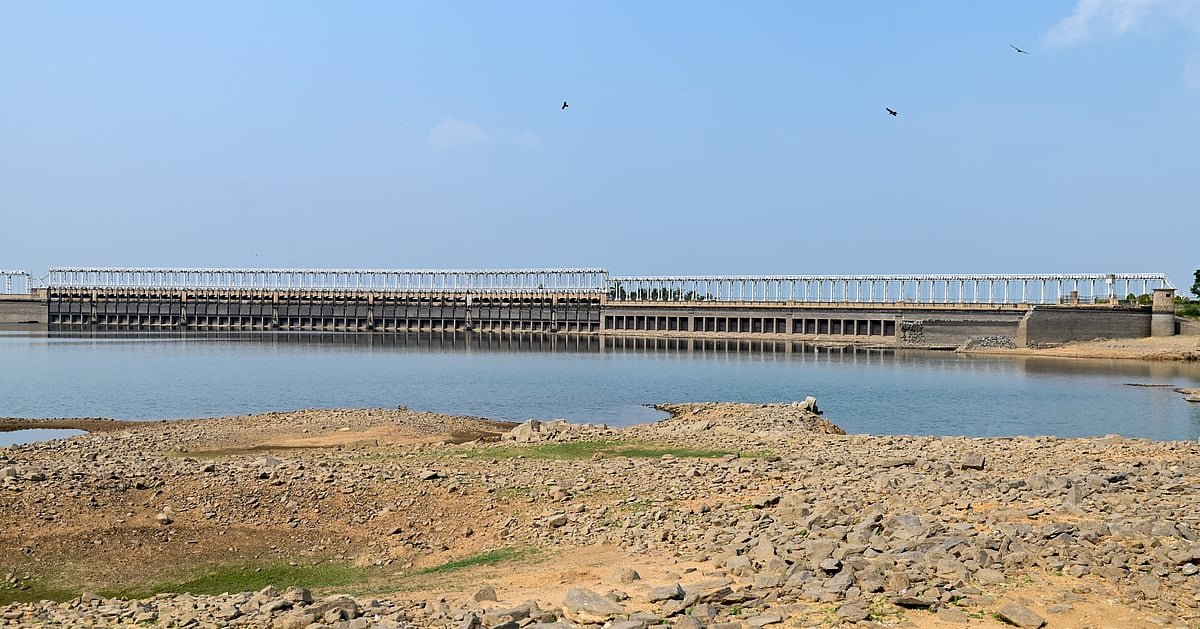
Mysuru’s farmers, especially those growing paddy, are confronting a severe water crunch as the Kabini and KRS reservoirs have dropped following water releases to Tamil Nadu, leaving only enough for drinking needs and threatening the region’s ability to meet its sowing target, projected at under 50% this year.
The water level in the KRS dam stood at 107 feet on September 6, with an inflow of 2,774 cusec and an outflow of 8,983 cusec.
K H Ravi, Joint Director of the Agriculture Department, said Mysuru district could achieve only 44% of its sowing target this year because of deficit rains. He noted that the total cultivable area is about 3.82 lakh hectares, including roughly one lakh hectares irrigated by the KRS and Kabini dams and 2.7 lakh hectares that are rain‑fed, and that the increased inflow will suffice only for drinking water.
District in‑charge Minister Yathindra Siddaramaiah clarified that water is being released solely to fill lakes and ponds and will not be allocated for paddy cultivation. Of the 3,76,609 hectares earmarked for sowing in Mysuru, only 44.11% (1,66,441 hectares) have been planted.
The region received scanty rainfall during the pre‑monsoon season, which hampered pre‑kharif sowing and other agricultural activities.
Kurubur Shanthakumar, president of the Sugarcane Growers Association, warned that paddy farmers could suffer crop damage because the Irrigation Consultative Committee has limited water releases to four rotations, stating, “Paddy is a 120‑day cycle crop. The farmers will suffer loss if the government stops releasing water to canals.”
Following farmer protests—during which several demonstrators were briefly detained while attempting to lay siege to the KRS dam—water is now being released on a rotation basis from KRS to fill lakes, support short‑term, less‑water‑intensive crops and protect sugarcane and other crops.
In Mandya district, more than half of the land is agricultural, with a sowing area of 2.49 lakh hectares and about 1.17 lakh hectares irrigated by the KRS and Hemavathi reservoirs. G S Jayaswamy, Joint Director for Agriculture, said deficit rains have forced officials to prohibit paddy cultivation, yet some farmers continue with paddy and sugarcane, making water releases difficult and risking losses on seeds, fertilisers and other inputs.
Hassan district had a sowing target of 2,86,186 hectares but only 93,004 hectares have been planted; officials have advised farmers to switch to ragi, a less water‑intensive crop, due to the same deficit‑rain situation.