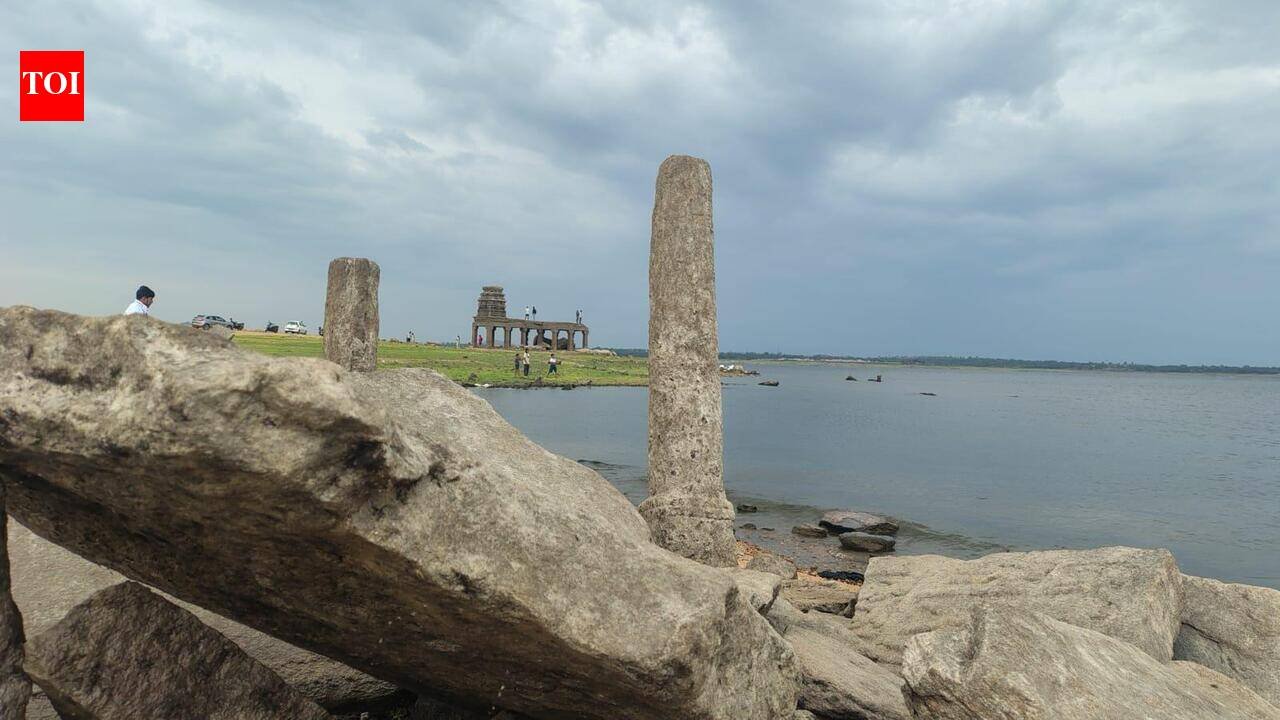
The Krishna Raja Sagar (KRS) reservoir’s water level fell about five feet over the past eight days, reaching 106.5 ft on Tuesday with an inflow of 2,289 cusecs and an outflow of 4,073 cusecs, prompting worries that Mysuru, Mandya and Bengaluru could face drinking‑water shortages if Cauvery inflows do not improve and Karnataka must keep releasing 6,000 cusecs to Tamil Nadu for another 15 days.
K Raghuram, superintendent engineer of Cauvery Neeravari Nigam Limited (CNNL), said roughly 2.5 tmc of water is needed each month for drinking purposes and that water can be drawn from KRS until the level falls to 65 ft; he added the state government has not ordered dam authorities to release water to Tamil Nadu.
Farmers and Kannada organisations protested on the old Bengaluru‑Mysuru highway in Mandya against the Cauvery Water Regulation Committee’s (CWRC) order to release 6,000 cusecs daily to Tamil Nadu for another 15 days, calling the directive unscientific and urging priority for Karnataka’s drinking‑water needs.
To help sustain KRS, outflows from the Hemavathi reservoir in Hassan district have been increased; Hemavathi joins the Cauvery at Sangama in KR Pet taluk before entering KRS, a step aimed at meeting Cauvery release obligations as the Kabini reservoir in HD Kote approaches depletion.
Kabini had provided relief in August after heavy rainfall in its Wayanad catchment, allowing surplus water to flow into Tamil Nadu for nearly three weeks, but its storage has since fallen sharply.
Overall storage in Karnataka’s four major Cauvery‑basin reservoirs has dropped to 72.5 tmc, about 63 % of their combined capacity of 114.5 tmc, versus 113 tmc on the same date last year.
On Tuesday, Kabini recorded an inflow of 1,751 cusecs and an outflow of 1,441 cusecs; Hemavathi received 3,414 cusecs and released 9,150 cusecs; Harangi logged an inflow of 833 cusecs and an outflow of 1,700 cusecs. Collectively, the four reservoirs took in 8,287 cusecs and released 16,364 cusecs, resulting in a net drawdown in storage.