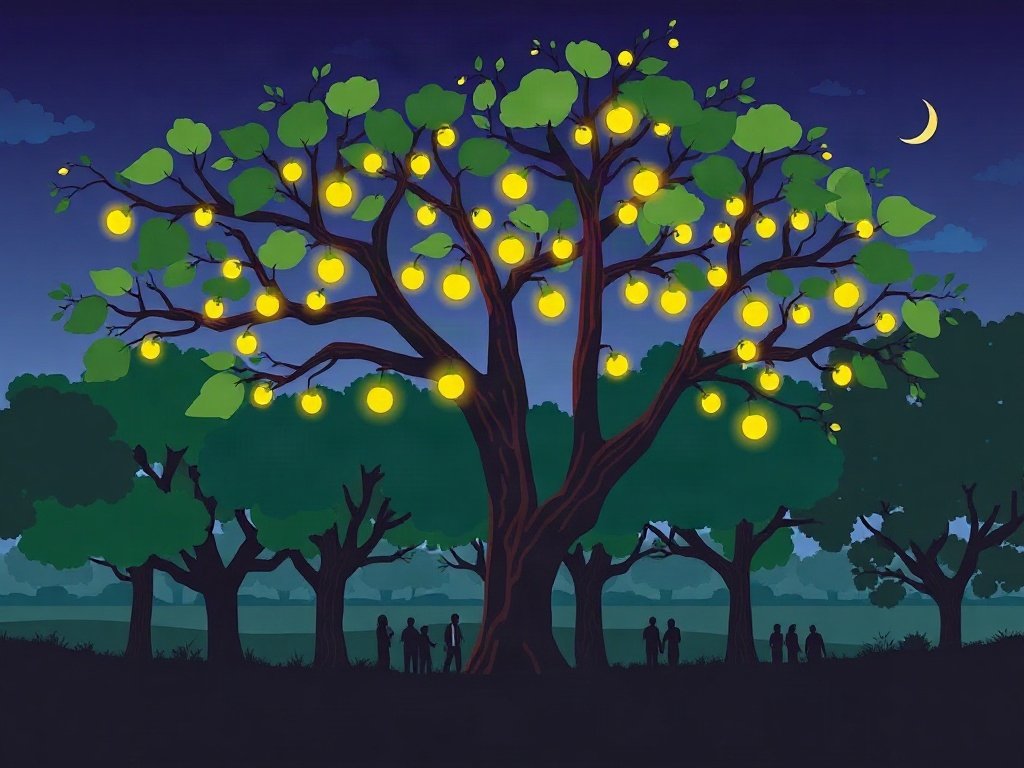
Environmentalists in Mysuru have warned that using trees for Dasara illumination threatens biodiversity and tree health, and have called on the state government, the Mysuru Deputy Commissioner, Mysore City Corporation and DCF Mysuru territorial to ban any such use by CESC and its contractors.
Chamundeshwari Electricity Supply Corporation (CESC) is preparing to adorn Mysuru with colourful designer lighting fixtures for the upcoming Dasara festivities, even as the city is celebrated as a Green and clean city. Activists note that each year the same concerns arise about attaching decorations to trees. It is Jumbo time in Mysuru: Dasara Elephants’ weight checked, training begins.
Last year CESC spent roughly Rs 7 crore to light 136 km of roads for 21 days, consuming about 2,57,520 units of electricity. Ravi Bale argued that amid deficient rainfall and reduced hydroelectric output, such electricity use is unjustified, adding that true worship of Goddess Sri Chamundeshwari devi means protecting nature rather than harming trees and their dependent biodiversity.
Retired Major General Sudhir G Vombatkere said that trees of any age form part of Mysuru’s cultural and environmental legacy promoted by Nalwadi Krishna Raja Wadiyar, and that safeguarding them fulfills citizens’ constitutional duty under Article 51A(g). He urged that trees be used only for natural shade and micro‑climate, and if night lighting is unavoidable, it should be mounted on temporary poles placed away from trees.
Associate Professor and Director of the Research and Development Cell, Department of Environmental Science, Karnataka State Open University, T S Harsha explained that fastening lights and cables directly to trunks or branches with wires, nails or ropes can wound bark and the cambium, inviting pests, fungi and bacteria, causing girdling and permanent scars. He added that prolonged artificial light disrupts trees’ internal clocks, while high‑intensity halogen or LED floodlights near foliage cause localized heating, drying, and can alter photoperiods, weakening resilience. Moreover, installing temporary poles or panels can damage surface roots, reducing water and oxygen uptake, and overloaded wiring raises the risk of short‑circuits, sparks, fires and electrocution hazards from sap‑conducted electricity during rain.
Zoologist B R Guruprasad highlighted that trees host a wide range of biodiversity—from microorganisms in bark and leaf litter to insects, birds and small reptiles that nest and feed in branches. He warned that artificial electric lights confuse nocturnal species and pollinators, potentially delivering electric shocks, and that even brief drilling of nails or hanging of lights can harm this urban ecosystem.